Bangkok business travellers now choose between two districts. The established city centre (Silom, Sathorn, Sukhumvit, Ploenchit) has the longest track record. The Rama 9 and Ratchadaphisek area is the newer commercial hub. Both are reachable by rail, but they differ in commute patterns, the feel of the neighbourhood, and the type of trip they suit. This guide compares them on accommodation, cost and experience, and helps answer a question many planners ask: What are the best business hotels near the Rama 9 CBD in Bangkok?
Overview: Two Business Districts, Two Different Profiles
Bangkok’s traditional CBD is usually defined as the area covering Sathorn, Silom, Ploenchit, Wireless, Rama I, Lumpini, Rajdamri and Sukhumvit. That is where most legacy corporate offices, embassies and long-established hotels are concentrated.
The Rama 9 area is the challenger. Developments at the Ratchadapisek–Rama 9 intersection, including the new Stock Exchange of Thailand and the AIA Capital Centre, have drawn companies to relocate there. The Grand Rama 9 project also includes Grade A offices, Unilever’s Asia-Pacific headquarters, a convention centre of about 3,000 square metres, and a shopping complex linked directly to the MRT concourse. AIA Connect, a newer office building on Ratchadaphisek–Rama 9 Road, has direct access to the MRT Thailand Cultural Centre station.
In short, the city centre offers depth and variety, while Rama 9 offers a compact, office-led district with more space and a quieter evening rhythm.
Comparison at a Glance
Here is the side-by-side comparison table summarizing Rama 9 vs. City-Centre business hotels based on your text:
Rama 9 vs. City-Centre Business Hotels Comparison
| Feature / Aspect | Rama 9 Business Hotels | City-Centre Hotels (Silom, Sathorn, Sukhumvit, Ploenchit) |
| District Profile | Newer, compact, office-led commercial hub with a quieter evening rhythm | Established CBD with legacy corporate offices, embassies, and high variety |
| Key Anchor Developments | Stock Exchange of Thailand, AIA Capital Centre, Grand Rama 9, AIA Connect | Financial hubs, embassies, established corporate towers, high-end shopping |
| Accommodation Type | Large, practical, meeting-focused properties with spacious layouts (e.g., Avani Ratchada Bangkok) | Wide choice across brands, boutique stays, and price points (e.g., Aloft Bangkok Sukhumvit 11) |
| Meeting Infrastructure | Strong on-site event capacity; multiple meeting rooms and soundproof/connecting rooms for teams | Varies by property; central footprint can be tighter on space |
| Cost & Spending Efficiency | Budget-predictable with mall dining and integrated venues; lower costs when working locally | Varied dining choices (street stalls to fine dining); lower transit costs for central client meetings |
| Neighbourhood & Evening Rhythm | Relaxed evenings; linked shopping malls, night markets, and local dining | Vibrant lifestyle, nightlife, rooftop bars, networking dinners, and heritage sights |
| Transit & Airport Commute | Direct access via MRT Blue Line (Phra Ram 9 / Thailand Cultural Centre); ~22 min ARL to Makkasan | Connected via BTS Skytrain & MRT Blue Line; ~26 min total rail commute via Phaya Thai / BTS |
| Best Suited For | • Meetings in Rama 9/Ratchadaphisek
• Team offsites & small events • Short 1–2 night efficient trips |
• Client entertainment & networking
• Multi-stop days across Bangkok • First-time visitors wanting classic Bangkok |
Accommodation: What Each Area Offers
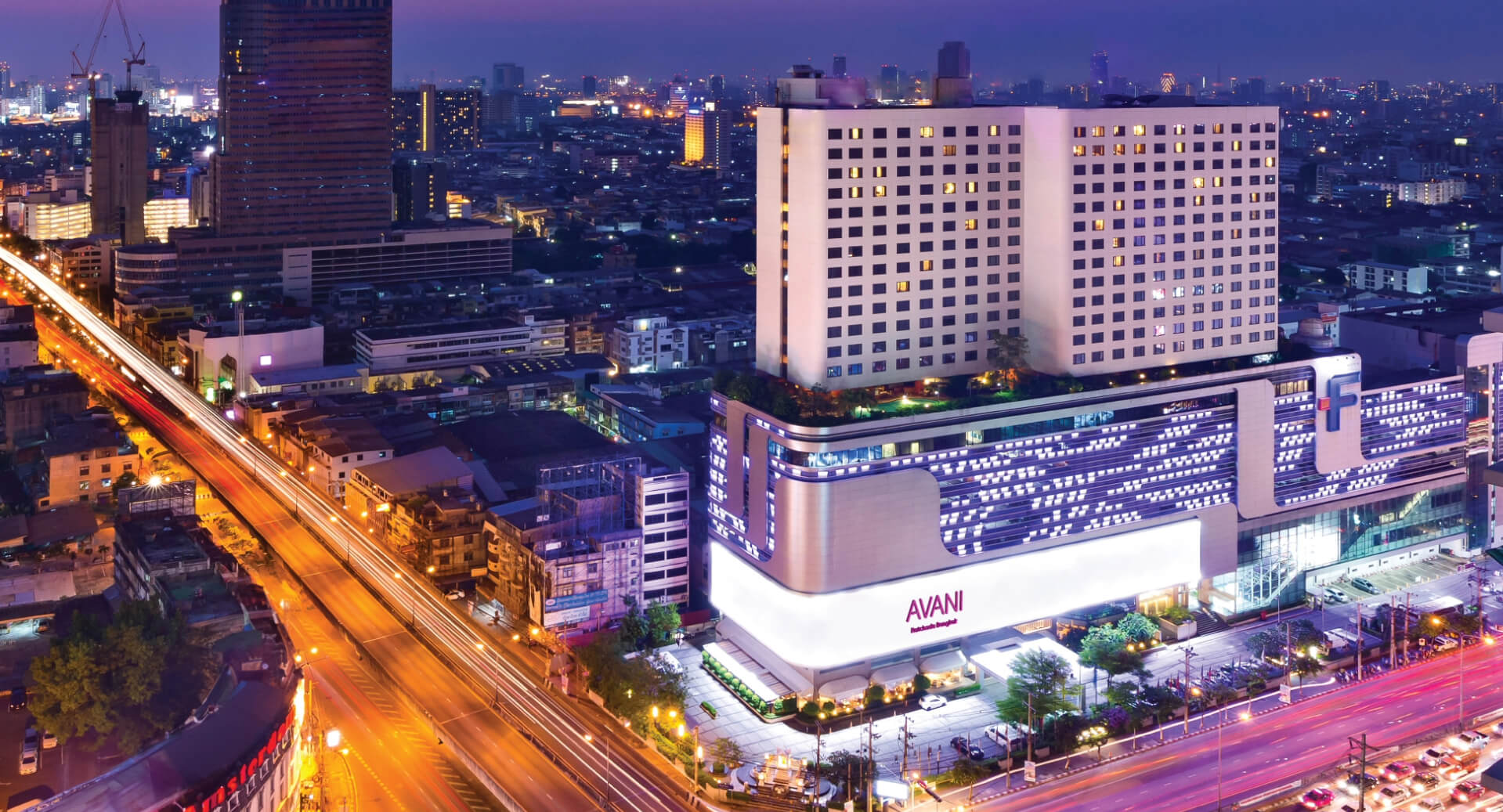
Rama 9 business hotels tend to be large, practical properties built around meetings and short work trips. Avani Ratchada Bangkok is a representative example. It has 402 rooms, nine meeting rooms and a business centre, and Phra Ram 9 station is about a five-minute walk away. Rooms include laptop-friendly workspaces and free WiFi. Soundproofed rooms and connecting rooms are also available, which suits travelling teams. The property is also connected to a shopping centre, so errands and meals do not require leaving the building complex.
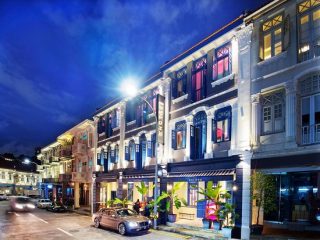
City-centre hotels offer more choice, particularly across brands and price levels. Aloft Bangkok Sukhumvit 11 is one example aimed at both business and leisure stays. It runs a complimentary shuttle to the Nana BTS and Sukhumvit MRT stations, which makes meetings across the city easier to reach without a taxi. The trade-off is that central sites are usually tighter on space, and quieter, business-focused blocks are harder to find.
Choose Rama 9 for scale and meeting infrastructure in one place. Choose the city centre for choice, boutique options and proximity to established client offices.
Cost: Where Your Budget Goes Further
Neither area is uniformly cheaper, so compare actual dates and room types. For context, Bangkok’s average daily rate across all hotel classes was THB 3,730 in Q1 2026, with occupancy at 77%. That is a citywide blended figure, not a price for either district.
Neighbourhood-level numbers vary by source. One aggregator-based comparison puts Silom and Sathorn at roughly US85anightandSukhumvitataboutUS75, based on 2025 Booking.com data. Another source reports Sukhumvit Road hotels averaging about US$100 a night. The gap between the two figures shows how much the room category and sample change the result, so treat both as directional.
Room rates are only part of the picture. Rama 9 hotels, such as Avani Ratchada Bangkok, often have meeting spaces on-site, which can reduce venue costs, and mall dining keeps daily spending predictable. City-centre hotels such as Aloft Bangkok Sukhumvit 11 offer a wider range of food options, from street stalls to fine dining, and ground transport costs are lower when meetings are spread across central offices. Rama 9 works out cheaper when your meetings are in the district itself.
Experiences: Working and Winding Down
In Rama 9, the day is organised around efficiency. Offices, malls and the MRT sit within a small area, and the district is well placed for travellers whose meetings are east or north of the old centre. Evenings are relaxed, with shopping centres, night markets and local restaurants nearby. Avani Ratchada Bangkok adds an outdoor pool and a spa, Silapart Wellness & Spa, offering Thai, Swedish and other massage treatments for after-hours downtime.
In the city centre, the experience is broader. Networking dinners, rooftop bars and heritage sights are close at hand, and travellers have a choice between BTS and MRT routes. The downside is road congestion at peak hours, which is why rail access matters when choosing.
From Suvarnabhumi Airport, the Airport Rail Link City Line reaches Makkasan station in about 22 minutes for 35 baht, with a covered walkway to MRT Phetchaburi. From there, the MRT Blue Line continues toward Phra Ram 9 station. For city-centre stays, the same line continues to Phaya Thai for a BTS connection, with about four additional minutes of travel and a 45 baht fare.
Best For: Matching the District to the Trip
- Meetings in Rama 9 or Ratchadaphisek: Rama 9 keeps offices a short walk or ride away.
- Team trips, offsites and small events: Rama 9 suits these, with larger properties offering multiple meeting rooms and connecting rooms.
- Short stays of one or two nights: Rama 9 offers efficient access with everything under one roof.
- Client entertainment and networking: The city centre has more dining and bar variety.
- Multi-stop days across Bangkok: The city centre offers more BTS and MRT options.
- First-time visitors who want classic Bangkok: The city centre is closer to landmarks and nightlife.
- Extended stays: Either works. Rama 9 gives more space and calm, while the city centre gives more lifestyle.
Conclusion
Neither district is better in every case. Rama 9 suits travellers who work in or near the new business district and want efficient, well-equipped hotels such as Avani Ratchada Bangkok, with meeting rooms and rail access close by. The traditional city centre suits those who value choice, networking and variety, as hotels like Aloft Bangkok Sukhumvit 11 show. The practical approach is to start from your meeting locations, check rail access to both, and compare current rates for your dates rather than relying on a single average.