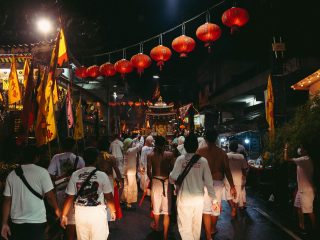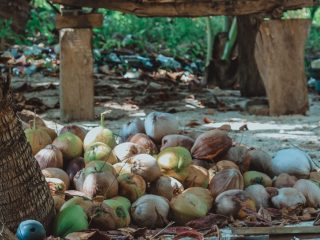
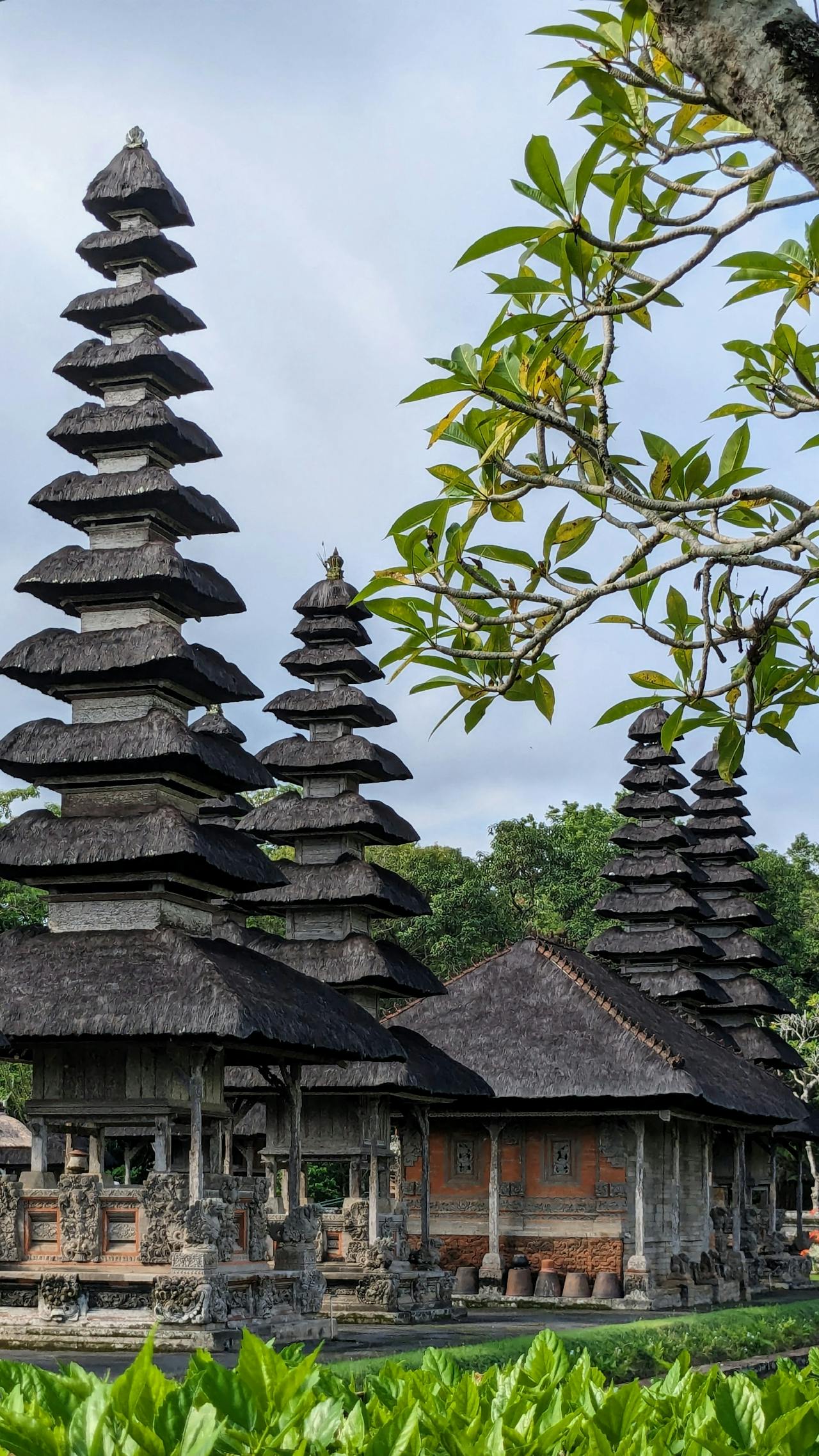
Set in the island’s lush highland interior, away from the beach crowds and the resort strips, this is where Balinese culture runs deepest — in its temples, its art, its food, and the quiet rhythms of daily life. For travellers who want to understand Bali rather than simply pass through it, Ubud is the place to start.
Rice Fields and Ridges of Light
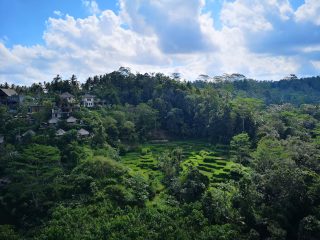
The Tegallalang Rice Terraces, with their cascading emerald fields shaped by generations of traditional farming, are a defining image of Bali and best seen in the early morning light. The Campuhan Ridge Walk offers a gentler encounter with the landscape — a peaceful hillside trail with sweeping views over jungle valleys and river gorges.
Spirits and Ceremonies
Ubud’s spiritual identity is felt everywhere. Saraswati Temple, with its lotus-filled pond and intricately carved stonework, sits in the heart of town. Goa Gajah — the Elephant Cave — draws visitors with its ancient rock carvings and mystical atmosphere. Tirta Empul, a short drive away, is one of Bali’s most sacred purification temples, where locals and visitors alike come to bathe in its holy spring waters.
Living Art and Tradition
The town is home to dozens of galleries, from major institutions like the Agung Rai Museum of Art to smaller studios tucked along quiet village lanes. The Ubud Art Market is the place to find textiles, woodcarvings, batik fabrics, and handcrafted jewellery — with bargaining part of the ritual.
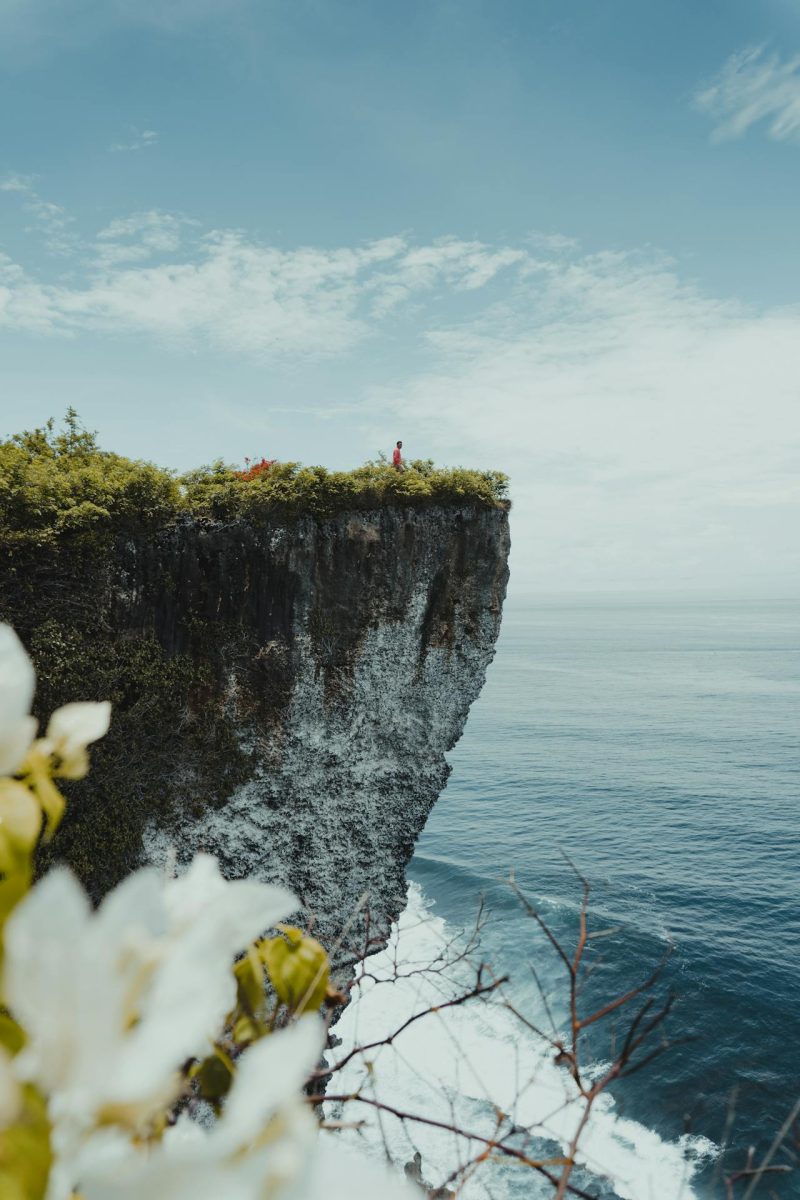
Food and Health
Ubud’s food scene reflects the character of the town — grounded, considered, and quietly exceptional. Warungs serving nasi campur and lawar sit alongside organic cafés and plant-forward restaurants that have made the area a destination in its own right for wellness travellers. When it comes to a 5 star resort in Bali for a good stay, Bali is also home to the Anantara Ubud Bali Resort, perfect for the discerning traveller.