Bangkok’s fast pace and traffic can make finding a quiet retreat essential for travellers. Japanese-style hydrotherapy is now widely available in the city, offering hot mineral baths that soothe muscles and combat urban fatigue.
If you are asking, “Which hotels in Bangkok have an onsen?“, selecting the right property requires evaluating water quality, thermal layouts, location, and guest policies rather than relying on general spa descriptions.
Step 1: Verify Water Quality and Thermal Facilities
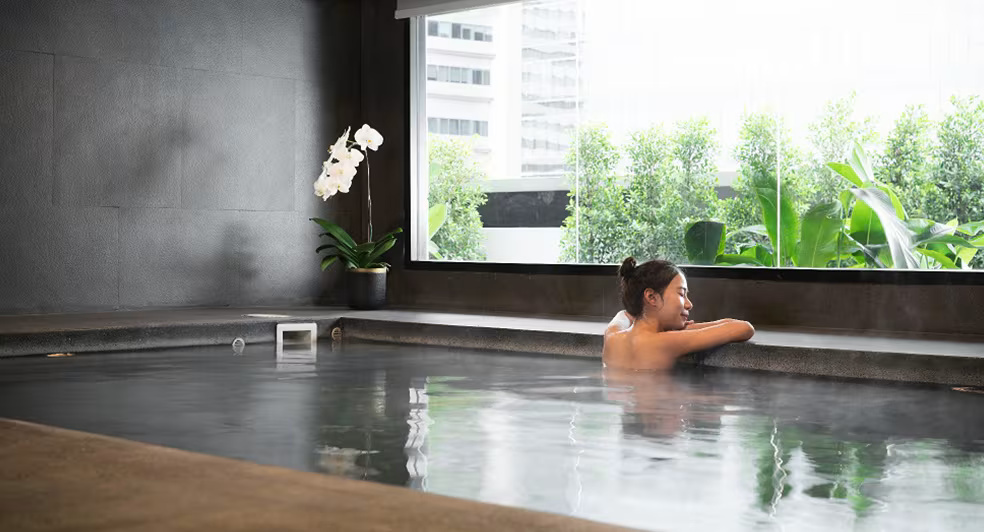
An authentic onsen setup requires specific hydrotherapy infrastructure rather than standard hot tubs.
- Temperature zones: Look for a facility offering a warm bath (38∘C–40∘C), a hot bath (41∘C–43∘C), and a cold plunge pool (16∘C–18∘C) to activate heat-shock proteins and boost blood circulation.
- Mineral content: Ensure the property uses authentic Japanese mineral salts or specialised water filtration systems.
- Supporting amenities: Choose hotels with steam rooms, dry saunas, and quiet relaxation lounges adjacent to the bath area.
Step 2: Choose Properties Near Rapid Transit
City traffic can quickly disrupt the relaxation gained from a thermal soak. Prioritise transit access and quiet surroundings:
- Transit proximity: Select a hotel within a 2-minute walk of an MRT or BTS station to eliminate long taxi rides in heavy traffic.
- Floor elevation: Select properties with bathhouses located on high floors (e.g., 12th floor or above) to block out street noise.
Step 3: Check Access Rules, Fees, and Hygiene Policies
Hotels enforce varying operational rules for their bathhouses:
- Pricing structure: Confirm whether onsen access is included in your room rate, restricted to suite tiers, or sold as an optional day pass.
- Bathing rules: Traditional facilities mandate gender-segregated bathing without swimwear. Check if the hotel requires strict traditional etiquette or allows swimwear in shared spaces.
- Capacities: Verify if non-hotel guests can purchase day passes, and ask how the hotel manages peak-hour crowding.
Step 4: Evaluate On-Site Dining and Accommodation Quality
A complete wellness stay depends on your experience outside the bathhouse:
- Balanced dining: Check for on-site restaurants serving light, nutrient-rich meals to replenish your body after heat exposure.
- Room recovery: Look for modern rooms equipped with effective blackout blinds, quiet climate control, and soundproof windows.
For travellers seeking this complete package in the central business district, properties such as Avani Ratchada Bangkok integrate onsen baths, saunas, and fitness facilities on a dedicated wellness level right next to major MRT links.
Tips for Your Onsen Stay
- Drink 300–500 ml of water before and after soaking to offset sweat loss.
- Stay in hot tubs for 10–15 minutes at a time to prevent dizziness.
- Wash completely at a shower station before stepping into any shared pool.
- Visit during off-peak hours (6:00 AM – 9:00 AM or 1:00 PM – 4:00 PM) for maximum quietness.
Conclusion
Choosing the right onsen hotel in Bangkok comes down to checking thermal setup, choosing a location directly on a transit line, and understanding facility rules. By focusing on temperature options, water treatment quality, and room comfort, you can ensure a quiet, restorative retreat in the centre of the city.