
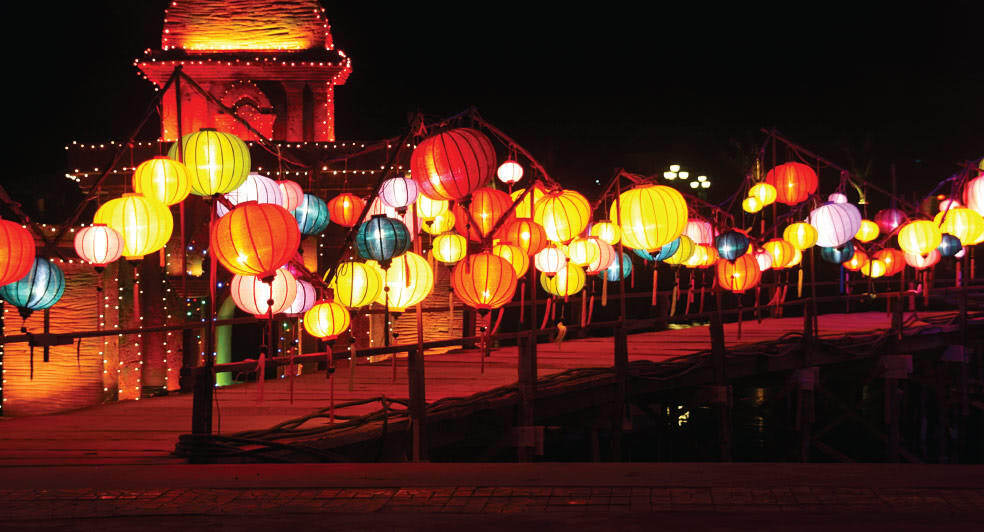
It is easy to mistake Hội An for a fictional town, drawn straight from a fairytale. Tucked between Huế and Quy Nhon, this central Vietnamese destination is a mosaic of dreamy lantern lights and timber frame homes – a fusion of cultures and a colonial past. If you’re looking to explore the colours and flavours of Hội An, here’s everything you need to know as a first-time traveller.
A UNESCO World Heritage Site
Hội An is a living museum. As a UNESCO World Heritage Site, its golden-walled architecture blends Japanese, Chinese, and European influences, preserved from its days as a 15th-century trading port.
Getting to Hoi An
Fly into Da Nang, then take a 45-minute taxi or shuttle south. Your Hoi An hotel might even offer private shuttle transfers from the nearest airport, so long as you reserve the service in advance via places like Anantara Hoi An Resort.
Best Time to Visit
Visit Hội An between February and April for the best weather and fewer crowds. Peak season falls between May and September, when the weather is the warmest and perfect for beach days nearby.
Exploring Hội An’s Heritage and Culture
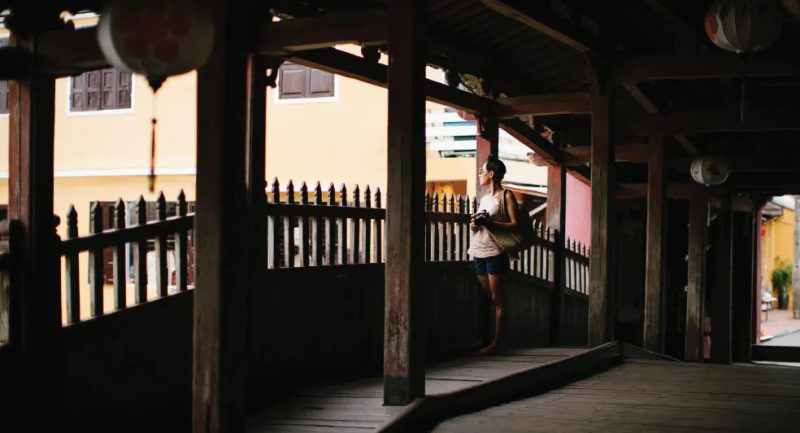
The best way to experience Hội An is to get lost in its pedestrian-only streets. To enter the specific historical sites, you’ll need to purchase a multisite entrance ticket (approx. 120,000 VND). Don’t skip the Japanese Covered Bridge, the intricate, Chinese-style assembly halls, and ancient merchant houses.
The town is also renowned for its tailoring houses, where skilled artisans craft entire bespoke collections and custom pieces in a day.
What to Eat in Hội An
Vietnamese cuisine is regional, and Hội An has several “exclusive” dishes you won’t find executed quite the same way anywhere else in the country. Try Cao Lầu, noodles made with water from an ancient well, and white rose dumplings, a signature local dish from a secret family recipe.
Festivals and Events
For a magical experience, visit during the Lunar Lantern Festival, when the town glows exclusively with silk lanterns.