
Featuring 26 mesmerising natural atolls across the Indian Ocean, the Maldives has earned a reputation for being a top destination for diving enthusiasts. If you’re thinking about taking the plunge to discover the marine wonders that await in the Maldives, here are 7 things you need to know for a truly memorable experience.
1. The Currents Set the Pace
The strong nutrient-rich currents that are driven by monsoons across the Indian Ocean are the reason for the archipelago’s vibrant marine life, but they also require good buoyancy control. Dive operators often use traditional dhoni boats for dropping divers in up-current, which allows for smooth gliding along the reef. A reef hook can also come in handy and is sometimes mandatory for holding position without touching corals.
2. It’s All About the Big Sightings
The Maldives is known for sightings of larger creatures, particularly Whale Sharks and Manta Rays. Whale Sharks are commonly spotted in the South Ari Atoll, while Mantas are known to frequent cleaning stations and feeding bays like Hanifaru Bay. Various shark species, as well as sea turtles and Eagle Rays, are also common sightings that divers can look forward to.
3. There Are Two Key Dive Seasons
The Maldives is excellent for year-round diving, but conditions and marine life sightings shift around two main seasons. The dry season from December to April is when the seas are generally calmer and bring the best visibility, particularly on the sides of the Eastern atolls. The wet season from May to November brings frequent rainfall; the waters are choppier, but the increase in plankton draws in more Manta Rays and Whale Sharks on the Western atoll sides.
4. You Can Choose Between Liveaboard or Resort Diving
Your base of operations will largely determine how your diving experience pans out. Liveaboards are for maximising dive time, moving across several atolls to follow wildlife migrations and access remote dive sites. If you’re a dedicated, experienced diver, this is for you. On the other hand, the upscale hotels & resorts in the Maldives, including the one by Avani Hotels & Resorts, offer a more luxurious holiday with frequent dive trips – perfect if you prefer a mix of diving and relaxation.
5. Advanced Certification Is Recommended
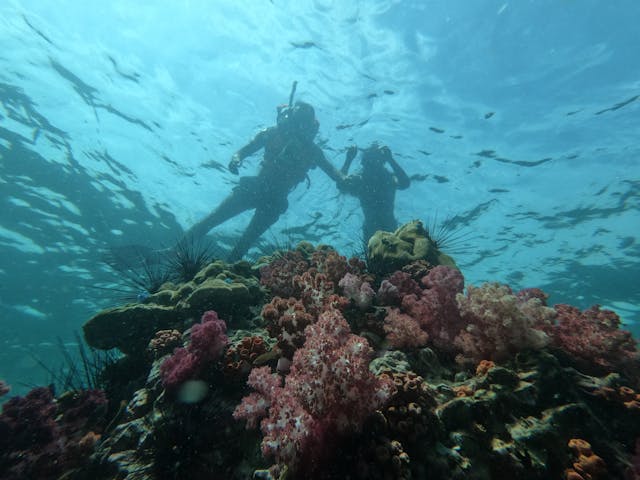
Powerful currents and deep channel waters define some of the most famous dive sites in the Maldives, which is why proper certification and experience are required. While an Open Water certification is enough for most sites, you’ll need to have an Advanced Open Water Diver certification if you’re opting for a liveaboard or hoping to enjoy the most thrilling deep-reef dives. It is also advisable to consult with instructors and guides to better understand the conditions before you take the plunge.
6. Dive Computers are a Legal Requirement
When exploring an environment that’s defined by strong currents, safety is paramount. This is why every diver is required by law to have their own dive computer. Sharing one is not permitted by most operators to ensure that each individual follows the right protocol. Investing in personal dive insurance that covers diving-related emergencies is also advisable.
7. The Corals Must Be Protected
Many of the reefs in the Maldives have previously suffered from the effects of human activity and overtourism. Although many of them are actively being restored through conservation efforts, divers are encouraged to be mindful of these colourful coral walls and to avoid touching them to help preserve them for the betterment of the entire marine ecosystem.