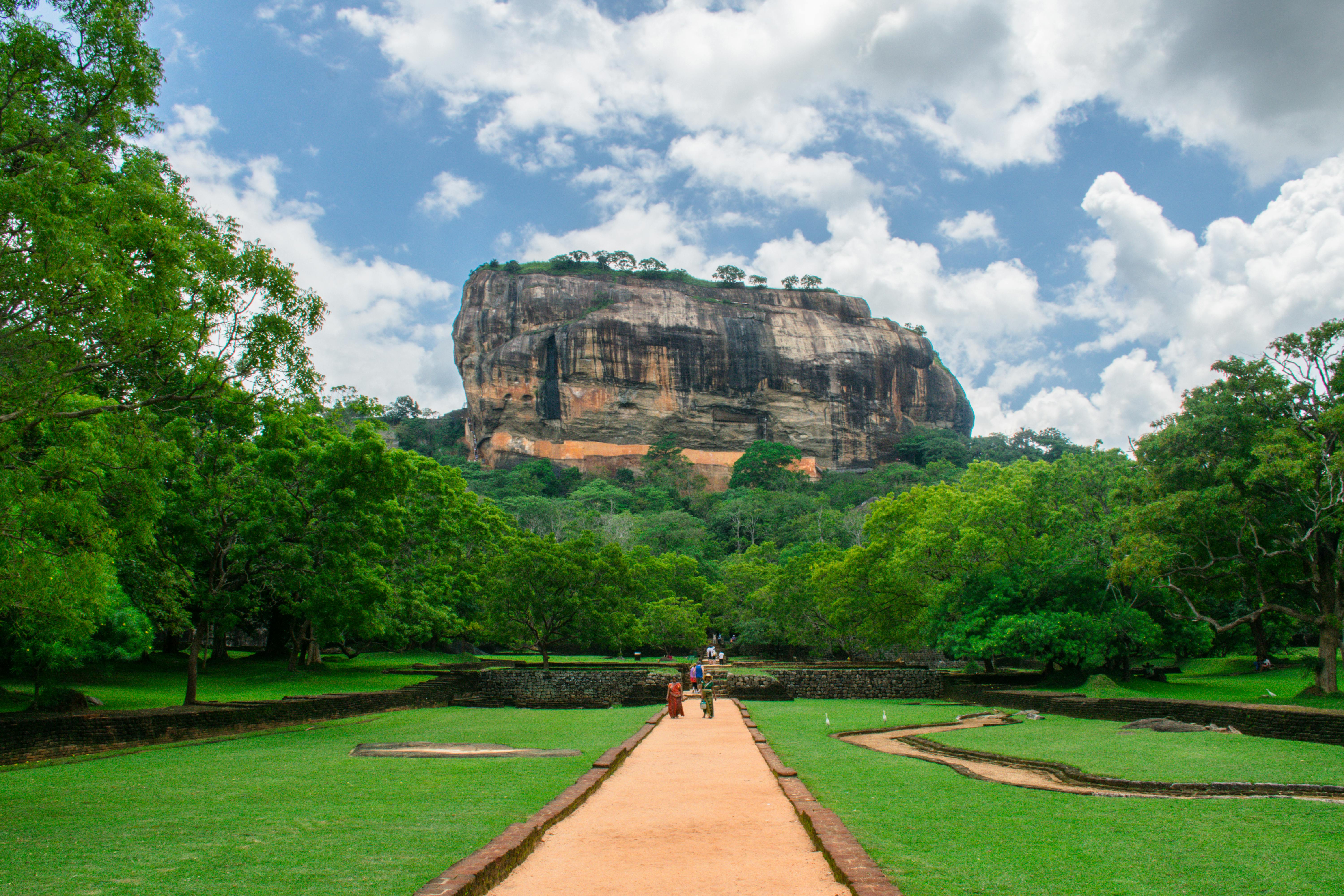
Exploring Sigiriya: The Pinnacle of Ancient Sri Lankan Heritage
Sigiriya, or Lion Rock, stands as a stunning testament to the architectural and artistic genius of ancient Sri Lanka, solidifying its status as one of the island nation’s most iconic heritage sites. Built in the 5th century CE by King Kashyapa, this UNESCO World Heritage Site is an unparalleled blend of fortress, palace, and elaborate city planning.
A Sky Palace and Fortress
The summit of the 180-metre-high rock features the remains of King Kashyapa’s palace, a self-sufficient ‘sky palace’. This plateau housed gardens and large cisterns carved into the rock for rainwater harvesting, ensuring a year-round water supply. Its dual function as both a heavily fortified citadel and a sophisticated royal residence makes the rock a unique example of ancient military and civil engineering, and visiting it is one of the top things to do in Sigiriya.
The Imposing Lion Gate
The site’s name, “Lion Rock” (Sinha-Giri), derives from the colossal lion sculpture that once guarded the final ascent. Today, only the gigantic lion’s paws remain, flanking the staircase to the summit. This dramatic entrance was not just decorative; it was a powerful symbol of royal authority and majesty. Today it is one of the top highlights of the rock, for visitors arriving from nearby hotels like Sigiriya Jungles Sri Lanka.
Engineering Marvel: The Water Gardens
At the base of the rock lies a vast complex of water gardens, considered some of the oldest landscaped gardens in the world. These gardens showcase an incredibly advanced hydraulic system. Using principles of gravity and pressure, the ancient engineers created symmetrical pools and fountains that still function during the rainy season, demonstrating remarkable sophistication in water management and urban design.
The Exquisite Frescoes and Mirror Wall
Halfway up the rock, within a sheltered pocket, are the world-famous Sigiriya frescoes. These vibrant, well-preserved paintings of celestial maidens (Apsaras) display an extraordinary level of artistic skill and technique. Adjacent is the Mirror Wall, originally polished to a brilliant shine now covered in centuries-old graffiti—poems and observations left by visitors as early as the 6th century, offering invaluable insight into the history of the Sinhala language.